Gemini BOM Platform
The Bill of Materials is the backbone of every product Nike makes — every material, component, and cost decision flows through it. When we inherited the program, it had an NPS of −50. Teams didn't trust the data. They worked around the system instead of with it. This wasn't a UI problem. It was a trust problem — and rebuilding trust required getting teams aligned on what the BOM even meant before a single screen was redesigned.
Role & Scope
- Role: Director of UX — led team of 5 designers and researchers
- Scope: End-to-end BOM platform redesign — product hierarchy, workflows, data views, governance patterns
- My work: Team leadership, research direction, executive presentations, design reviews, factory validation in Asia, cross-functional alignment
- Partners: Product Creation, Costing, Engineering Directors, Operations, factory partners
The real problem
The biggest challenge wasn't the interface — it was alignment. Multiple teams were contributing to a single BOM truth with different definitions, different incentives, and different tolerances for ambiguity. Finance meant one thing by "accurate." Product Creation meant another. Until those definitions were shared, no UI improvement could hold. Getting that alignment — at Director level, across functions — was the prerequisite work that made everything else possible.
- No shared definition of what "accurate" BOM data actually meant across teams
- High variance in workflows by product type, category, and geography
- Complex permissions and ownership models across internal and factory partner users
- Designs needed to work on a factory floor in Asia, not just in a Portland conference room
How we got there
I directed the team to treat the BOM as a decision system — not a database viewer. Instead of asking "how do we display this data," we asked "what decisions does this data need to support, and what does someone need to see to make that decision confidently?" That reframe shaped everything that followed.
- Ran cross-functional workshops to establish shared definitions of product hierarchy, data ownership, and what "good" looks like — before any design work started
- Directed parallel workstreams — component view, workflow redesign, governance patterns — running simultaneously to meet program timelines
- Traveled to Asia for factory validation — testing with the people who build the products, not just the people who plan them
- Redesigned navigation around real decision paths: review → validate → resolve
- Introduced clear patterns for status, exceptions, and ownership at every level of the hierarchy
- Built executive presentations to maintain VP-level visibility and secure continued investment across phases
Before the design work started
The most consequential work on Gemini happened before any screen was designed. Running a team of 5 designers and researchers across parallel workstreams — while simultaneously managing VP-level stakeholder alignment across Finance, Product Creation, Engineering, and Operations — required the kind of program rigor that shows up in planning sessions, not portfolios. These artifacts show how that work was structured.
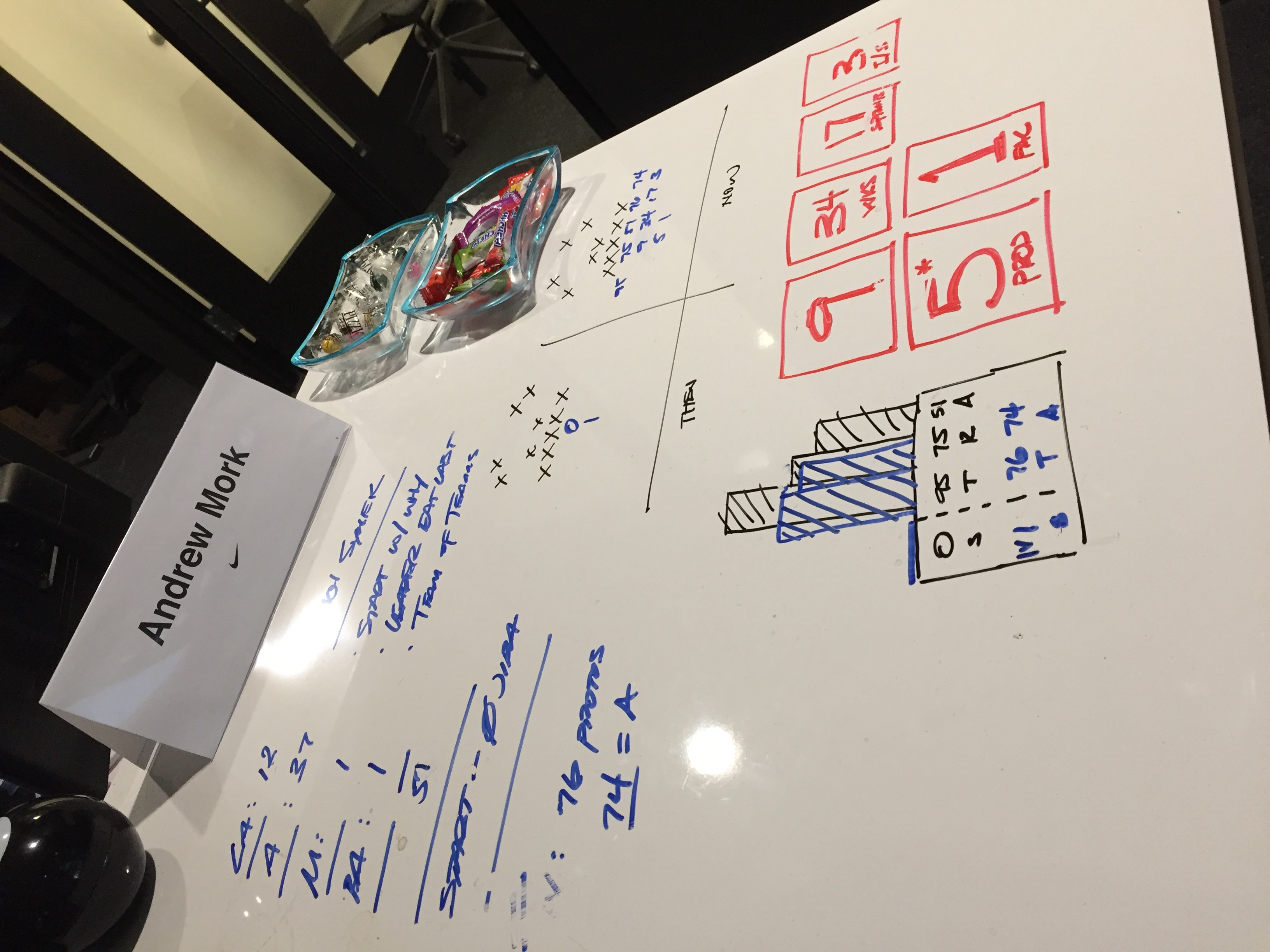
Program planning — tracking delivery across a multi-phase redesign
Velocity tracking, sprint sequencing, and delivery metrics across the Gemini program — 9 sprints, 34 weeks, 13 features shipped in Phase 1. At Director level, this was as much the work as the design itself: keeping a team of 5 coordinated across parallel workstreams while maintaining VP-level visibility into progress and risk.
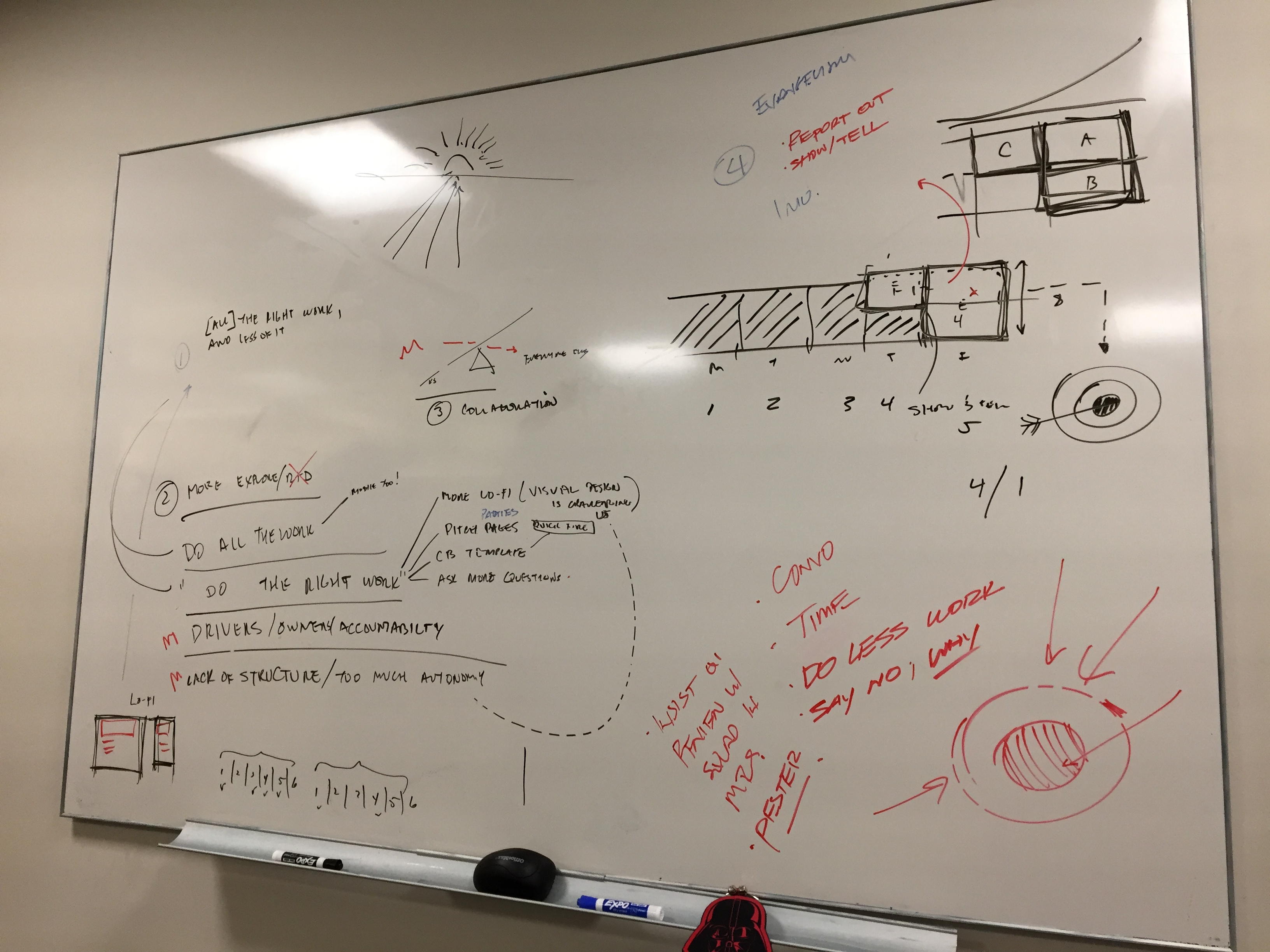
Team operating model — how we worked before how we designed
"Do the right work, and less of it." The operating model established at the start of the Gemini program — distinguishing exploration mode from production mode, defining collaboration rhythms, and establishing how a team of 5 would make decisions together under time pressure. Getting this right was the prerequisite for the design work that followed.
The work
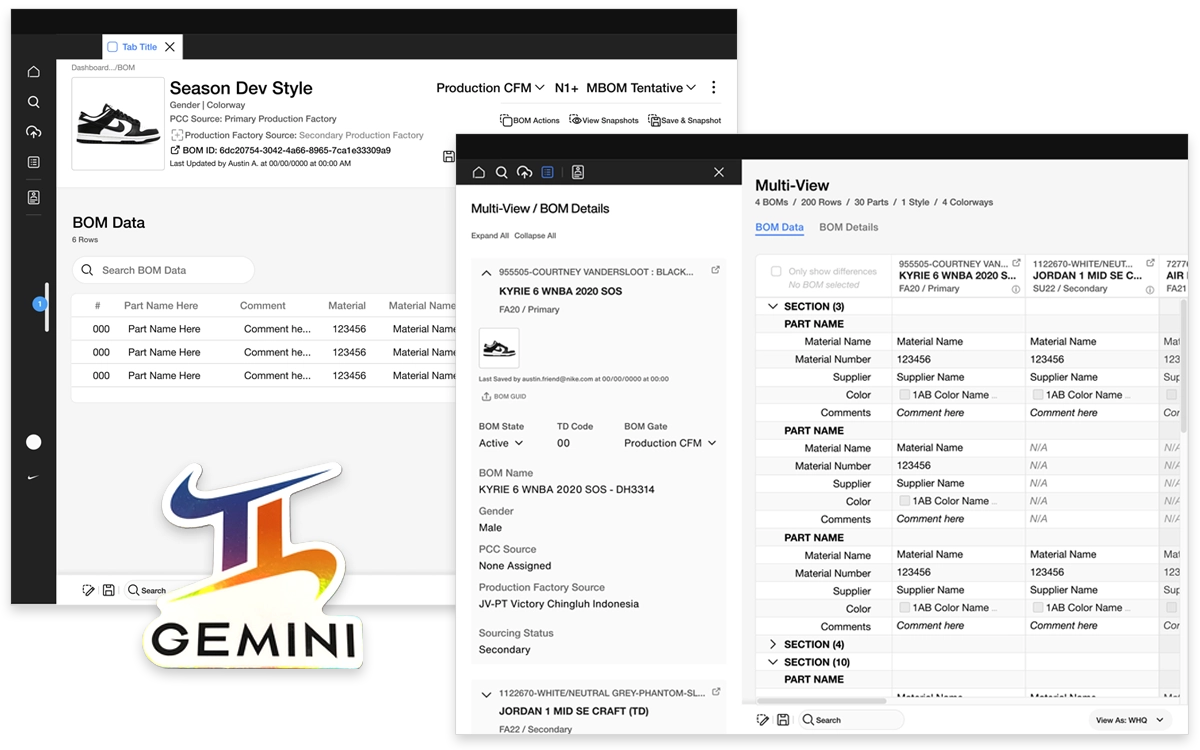
BOM Platform — decision system, not database viewer
Navigation redesigned around real decision paths: review → validate → resolve. Clear status patterns and ownership indicators at every level of the product hierarchy — so teams could act on data rather than argue about it. The interface that emerged from 9 sprints of cross-functional alignment work.
What it delivered
- Teams shifted from working around the BOM to working with it — the clearest sign trust had been rebuilt
- Reduced time spent reconciling information across spreadsheets and offline tools
- Governance patterns established here carried directly into Component Costing and Apollo
- Factory validation confirmed designs worked under real production conditions — not just in review sessions
What this taught me
The most important design work happened in workshops, not Figma. Getting teams to agree on what the BOM means, who owns it, and what "good" looks like was harder than any interaction problem we faced — and it was the prerequisite for all of it. Until that alignment existed, no UI improvement could hold.
The factory trip to Asia wasn't optional. Designs that worked in a conference room didn't always work on a factory floor. Testing in context — with real users under real conditions — caught things that remote testing never would have.
Part of the Nike product creation ecosystem
Gemini and Component Costing were designed to work together — shared data, shared definitions, shared patterns. The BOM and costing systems are two sides of the same product creation decision. The governance and component patterns built here carried directly into Apollo and the wider Nike ecosystem.
View Component Costing → View Apollo →